



Rules and pitfalls of Casino Random Number Generators
Nội dung trang
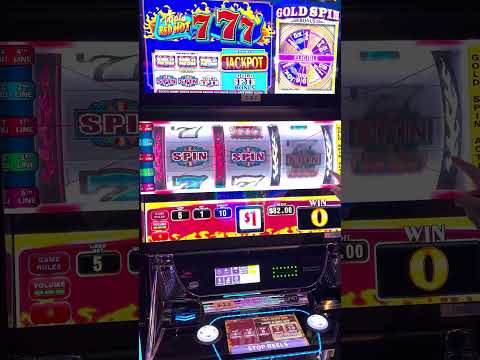
Every win, every near miss, and every card played in a digital casino originates to a single invisible engine: the random number generator flutterhallcasino.uk. Far from a simple dice roller, an RNG is a sophisticated algorithm that determines outcomes with no memory, no bias, and no human intervention. At FlutterHall Casino, players explore hundreds of slots, table games, and live dealer titles, all underpinned by RNGs that have been audited for fairness. Understanding the fundamental do’s and don’ts of these systems transforms a casual spin into an informed decision. It also reveals why a trusted platform, transparent licensing, and independently verified software are the pillars of a genuinely enjoyable gaming experience.
Grasping RNGs – The Foundation of Honest Play
A random number generator in an online casino is a application that consistently creates sequences of numbers that correspond to game outcomes. In a slot, the moment a player activates spin, the RNG grabs the current value and converts it into a reel position. The process is completely code-driven in its code, yet it imitates true randomness by using a seed value that is unknowable. Most casinos use pseudorandom number generators (PRNGs) that are based on mathematical formulas, often seeded by high-entropy sources such as server noise, mouse movements, or thermal fluctuations. The result is a flow of numbers that satisfies strict statistical tests for uniformity and independence.
The difference between true random generators and PRNGs is important. True RNGs derive randomness from physical phenomena like radioactive decay, but they are not commonly utilized in online gambling because they are slower and less scalable. A well-designed PRNG, however, delivers performance that is indistinguishable from true randomness for all practical purposes. The key is the seed—if an attacker could predict the seed, they could predict outcomes. That is why trustworthy casinos, including FlutterHall Casino, partner with game developers who use cryptographically secure seeds and regularly refresh them. The combination of a robust algorithm and an unforeseeable seed ensures that not the player nor the house can control the sequence.
How Regulatory Bodies and Testing Labs Maintain RNGs Fair
Licensing authorities including the UK Gambling Commission and the Malta Gaming Authority mandate operators to submit their RNG implementations for independent testing before a casino can go live. This process entails a full examination of the source code, the seed generation mechanism, and the algorithms that translate raw numbers into game outcomes. The lab verifies that the RNG yields a uniform distribution over millions of iterations and that no hidden weighting may be activated by bet size or session length. FlutterHall Casino functions under a framework that necessitates ongoing compliance, meaning the RNG is not tested once and forgotten; it is subject to periodic re-evaluation whenever software updates are deployed.
Testing labs employ statistical suites like Marsaglia’s Diehard tests or the NIST Statistical Test Suite to check for biases, serial correlation, and other anomalies. They also conduct penetration tests to ensure that the RNG cannot be seeded in a predictable way by an external actor. The certificate provided by the lab is not a blanket endorsement; it generally covers specific game providers and versions. This is why a casino’s fairness page should detail exactly which games have been certified. By relying on these independent checks, players can trust that the digital dice, cards, and reels at FlutterHall Casino act just as randomly as their physical counterparts in a land-based venue.
Essential practices – Important Guidelines for Gamblers Evaluating RNG Reliability
Check Certification and Regulation
An essential step is to look for visible certification seals from independent testing laboratories. Bodies such as eCOGRA, iTech Labs, and Gaming Laboratories International (GLI) subject RNG software to rigorous source code reviews and mathematical evaluation. A real seal is active and navigates to a valid certificate document that lists the game categories tested. At FlutterHall Casino, the footer section displays applicable licensing information, and players can locate the testing mark on the fairness area. Verifying these proofs is a rapid way to ensure that the casino does not just claim fairness but has enabled third-party auditors to verify it under monitored circumstances.
Spotting Real Seals vs. Counterfeit Logos
Dishonest sites can duplicate a logo and place it on a homepage without any verification. Savvy players should click the seal; a legitimate certificate always connects to a active report stored on the testing agency’s domain. The report will display the particular games, the time of the last audit, and the RTP (RTP) percentage validated. If the seal is a non-interactive image or navigates to a generic page, it is a warning sign. FlutterHall Casino guarantees that every certification badge is linked to the corresponding testing organization, offering players instant access to the proof. Taking that additional half-minute to click through is among the easiest yet most powerful do’s for anyone dedicated about fair play.
Grasp Game Math
Another essential practice is to understand the expected RTP and volatility of the games being played. RNGs do not promise wins; they distribute results in line with a programmed paytable over countless of spins. A slot with a 96% RTP will, on mean, give back 96 credits for every 100 wagered over the long term, but short-term outcomes can fluctuate dramatically. By reading the game instructions and the paytable information, players form reasonable outlooks. FlutterHall Casino supplies RTP data for many of its games immediately in the game interface or help section. Provided with that understanding, a player can prevent the trap of chasing a game that “feels due” and instead center on fun value.
The Portable and Live Dealer Twist – RNGs Beyond Virtual Slots
RNGs are not restricted to desktop slot machines. When a player launches a game on a smartphone or tablet, the same certified algorithm runs on the server side, with the client device merely displaying the result. The mobile experience at FlutterHall Casino is optimised for touchscreens, but the RNG core remains unaltered. Even if the device’s operating system supplies a local entropy source for something like a mini-game animation, the primary outcome is still decided by the server’s PRNG. This architecture ensures that a player using a Wi-Fi connection on a tablet meets the same fair odds as someone on a desktop computer, with no loss of integrity.
Live dealer games introduce an interesting layer. The roulette wheel and card decks are physical, so the outcome is not generated by software alone. However, the shuffling of cards in live blackjack or baccarat often leans on an RNG to determine the order of the deck before it is placed in the shoe. Similarly, the automated shuffling machines in live studios employ RNG algorithms to mix cards. In virtual sports and instant-win games, the RNG powers the simulation entirely. FlutterHall Casino’s live dealer lobby and virtual sports sections are obtained from reputable providers whose RNG components undergo the same rigorous certification as their slot counterparts, securing that even the blend of physical and digital remains clear.
Errors – Widespread Fallacies Which May Mislead Gamblers
Among the most common don’ts is believing in the gambler’s fallacy—the notion that following a series of losses a win is imminent. An RNG has no memory. Every spin of a roulette wheel or click of a slot button represents an independent event. The probability of landing on red remains identical on the one-hundredth spin as on the first. Casinos profit from the consistent house edge, rather than from manipulating individual sessions. At FlutterHall Casino, every game outcome comes from the same certified RNG, and no sequence of past results can impact the next random number. Treating each round as a fresh start is essential for responsible play.
A further mistake is to trust “hot and cold” number trackers or external software that claims to predict RNG patterns. These tools are frequently marketed as advantage-play aids, but a properly implemented PRNG generates outcomes that cannot be mathematically predicted. A slot game can present a history of recent spins, but that is solely for entertainment and does not disclose any exploitable cycle. Players should likewise avoid believing that a casino is tampering with the RNG simply because they encounter a losing session. Variance is a natural part of the statistical model. Regulatory oversight and periodic audits guarantee that the average return remains within the certified range, rather than that every session ends in a win.
Picking a Casino That Prioritises RNG Integrity – What to Watch For
When selecting a platform, players should review the footer for licensing details and the inclusion of a dedicated fairness or security page. FlutterHall Casino makes this information clear, showing its licensing jurisdiction and links to testing certificates. A casino that is dedicated about RNG integrity will not keep these details behind a generic FAQ. In addition, the cashier methods that are offered say a lot about operational transparency. Popular payment channels such as Visa, Mastercard, Skrill, Neteller, and bank transfers are available, and withdrawal times typically extend from one to three business days for e-wallets, with clear processing windows listed in the banking section. This operational clarity is a strong signal that the casino values trust.
Beyond the paperwork, the diversity of game providers is another indicator. Studios like NetEnt, Microgaming, and Evolution Gaming have their own RNG certifications, and when a casino hosts their titles, it gains that layer of assurance. FlutterHall Casino’s library spans slots, progressive jackpots, classic table games, and a live casino, all of which are supported by these industry leaders. A generous welcome bonus or ongoing promotion is only worthwhile if the terms are fair and the wagering contribution rates are clearly specified. By prioritising RNG transparency, secure payments, and responsible gambling tools, a player can centre on the entertainment rather than concern themselves about the integrity of the next spin.
FAQ
Can a casino interfere with the RNG to reduce payouts?
Licensed casinos are unable to alter the RNG without breaching their regulatory obligations. Independent testing labs review the code and validate that the payout percentage corresponds to the certified range. Any change to the algorithm demands re-certification. At FlutterHall Casino, the RNG is secured and supervised, and the house edge is embedded into the game rules by design, not by tweaking individual outcomes. Players are safeguarded by the auditing process that assures the long-term average return stays exactly as advertised.
What indicates if an online casino’s RNG is really random?
The strongest sign is a interactive certification seal from an accredited testing laboratory such as eCOGRA or iTech Labs. Tapping the seal should direct to a live certificate that specifies the games tested and the date of the last audit. Additionally, the casino’s licensing footer should mention a trustworthy regulator. FlutterHall Casino shows these credentials openly, letting players to verify that the RNG has passed industry-standard statistical tests for randomness and non-predictability before they place a bet.
Can the RNG influence live dealer games?
Interactive dealer games utilize real cards, wheels, and dice, but RNG technology often plays a secondary role. Automatic shuffling machines and the initial deck ordering in numerous real-time blackjack and baccarat tables are based on RNG algorithms to guarantee a truly random shuffle. The subsequent dealing is then handled by a human croupier. This combined approach is also examined by accredited labs, so the physical randomness and the electronic shuffle work together without compromising the honesty of the game at FlutterHall Casino.
What is the distinction between pseudo-random and real random number generators?
A true random https://nationalpost.com/news/canadians-td-bank-settlement number generator harvests randomness from real-world processes like atmospheric noise or radioactive decay, producing genuinely unpredictable values. A algorithmic generator uses a numerical algorithm that begins from a initial value and creates a sequence that appears random but is predictable. Internet casinos utilize PRNGs because they are rapid and mathematically indistinguishable from true randomness when the seed is highly unpredictable. The essential element is the seed’s privacy, which is why casinos allocate resources to high-entropy starting points and periodic re-seeding.
Are mobile casino games as fair as PC games?
Absolutely. The RNG that determines the result of a mobile slot or table game operates on the casino’s server, not on the device. The mobile app or browser simply presents the result that was already created by the same verified algorithm used for desktop play. FlutterHall Casino’s mobile platform maintains the same RNG integrity, meaning that whether a player spins on a smartphone during a commute or on a laptop at home, the odds of winning remain unaltered and fully audited.